places
Dunhuang Travel Guide: Mogao Caves, Desert and Silk Road
Plan a thoughtful first trip to Dunhuang with the essential sights, a practical two-day outline, transport context, and responsible cave etiquette.
Why visit Dunhuang?
Dunhuang brings together three journeys in one place: the Buddhist art of the Mogao Caves, the desert-and-oasis landscape around Mingsha Mountain and Crescent Lake, and the frontier history of the Silk Road. A first visit works best when these are treated as connected chapters rather than a checklist of attractions.
Essential places for a first trip
Mogao Caves
The UNESCO-listed cave complex is the cultural anchor of Dunhuang. Its murals and painted sculpture span roughly a millennium. Reserve through the official operator, check the current visit format, and follow all photography and conservation rules. Begin with our Mogao Caves guide.
Mingsha Mountain and Crescent Lake
The dunes and oasis offer the clearest encounter with Dunhuang’s physical setting. Heat, wind and sand can materially change the experience, so choose timing based on a current forecast. Read the Mingsha Mountain guide and Crescent Lake guide.
Yumen Pass and the western route
The Yumen Pass landscape gives physical scale to Dunhuang’s frontier history. Other route choices include Yang Pass, the Yardang Gobi landscape and the Western Thousand Buddha Caves. Do not force all of them into one day without checking distance and visit time.
Dunhuang Museum and the city
A Dunhuang Museum visit provides useful chronology before or after the caves. Leave time for the city itself rather than moving directly between headline sights.
Yulin Caves for a deeper art trip
The Yulin Caves near Guazhou are a separate grotto complex and a substantial excursion. Add them when you have at least four days or a strong interest in Buddhist mural history.
How many days do you need?
Two full days cover the central experiences without rushing: one day focused on Mogao and the city, and one on the dunes or western landscape. Three days gives more room for the museum, Yumen Pass, weather changes and rest. See our two-day Dunhuang itinerary.
Choose by the time you actually have:
- One day in Dunhuang is a highlights plan, not a complete visit.
- Two days in Dunhuang works for Mogao, the museum, Mingsha Mountain and Crescent Lake.
- Three days in Dunhuang adds the western Silk Road route without compressing every stop.
- Read how many days you need in Dunhuang for tradeoffs by travel style.
Plan the practical details
Start with how to get to Dunhuang by air or rail, then compare where to stay in Dunhuang by area rather than by a short-lived hotel ranking. Our Dunhuang packing list focuses on sun, dry air, sand, temperature changes and cave etiquette.
When should you go?
There is no universally perfect month. Summer can be hot and busy; winter can be cold; spring weather can include stronger wind and blowing dust. Compare daylight, temperature, crowd tolerance and the experiences you want, then check current conditions immediately before travel. Use our Dunhuang weather and best-time guide.
Map your route
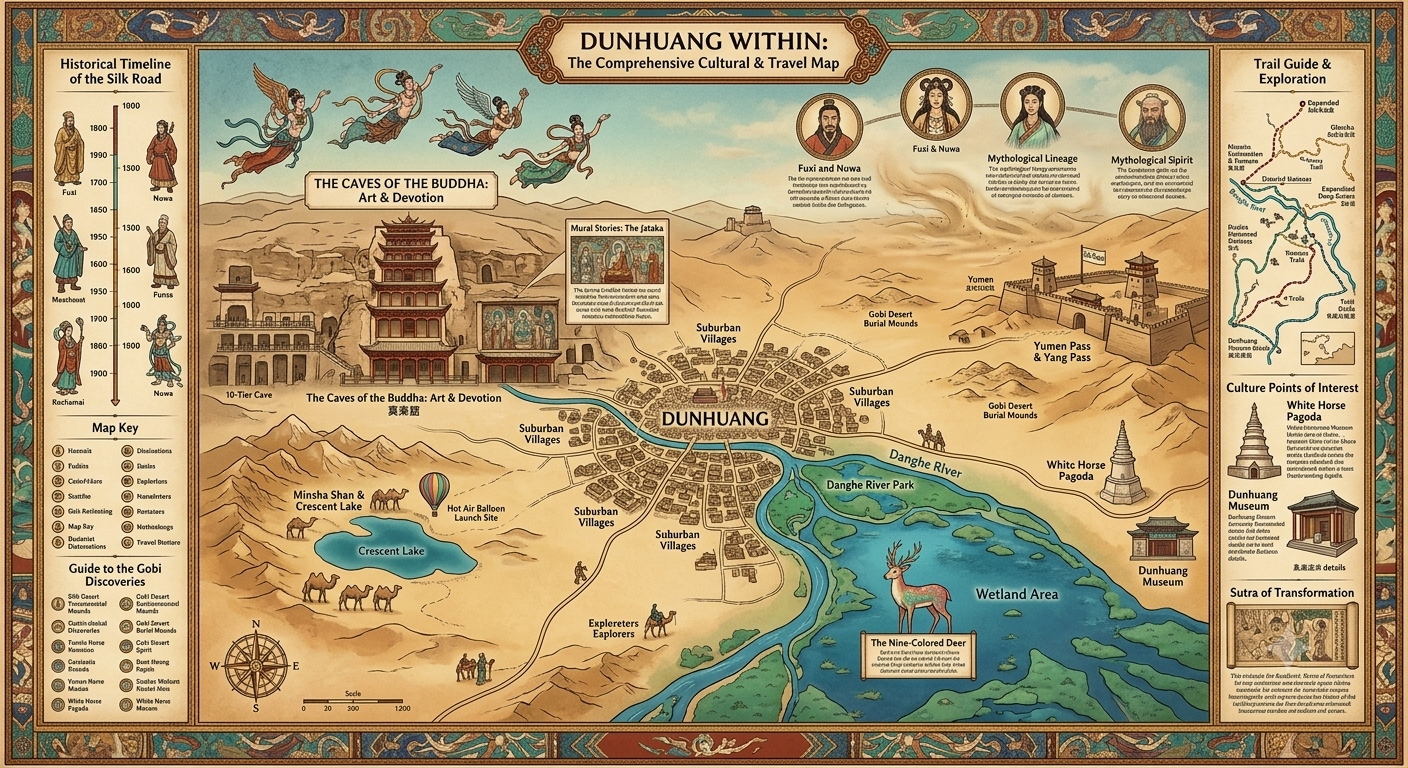
Use the interactive Dunhuang map to switch between travel sites, traces of Buddhist art, and mural stories. The map is an editorial orientation tool rather than a navigation replacement.
Travel responsibly
- Use official booking and visitor information for protected sites.
- Never touch cave surfaces or ignore photography restrictions.
- Treat murals, Buddhist figures and sacred narratives as cultural heritage, not decorative props.
- Check official weather warnings before desert excursions.
- Choose fewer stops when that allows more context and attention.
Continue with what to eat in Dunhuang or explore the deeper history of Dunhuang as a Silk Road crossroads.
Sources & further reading
- Mogao Caves — UNESCO World Heritage Centre
- Digital Dunhuang — Dunhuang Academy