places
Dunhuang Museum: What to See Before or After Mogao
Use Dunhuang Museum to understand the oasis, Han frontier, Silk Road exchange and cave chronology before or after visiting the Mogao Caves.
Why add the museum
Dunhuang Museum provides the chronological and geographic frame that a short cave visit cannot. It connects the oasis settlement with Han frontier systems, later Silk Road exchange, Buddhist art and the modern rediscovery of manuscript culture.
What to look for
Start with maps and timelines. Dunhuang’s history is easier to understand when dynasties, route directions and nearby passes appear together. Then look for material evidence of everyday life—documents, objects, burial finds and reproductions—not only the most visually dramatic Buddhist images.
Exhibition arrangements change, so this guide does not promise a particular object or gallery. Read the museum’s current information when available and let the displayed labels, not an old blog, determine what is genuinely on view.
Before or after Mogao?
Before Mogao, the museum gives names and dates to the layers you will encounter. After Mogao, it helps transform a compressed guided visit into a broader historical sequence. Both orders work; the cave reservation is the fixed point.
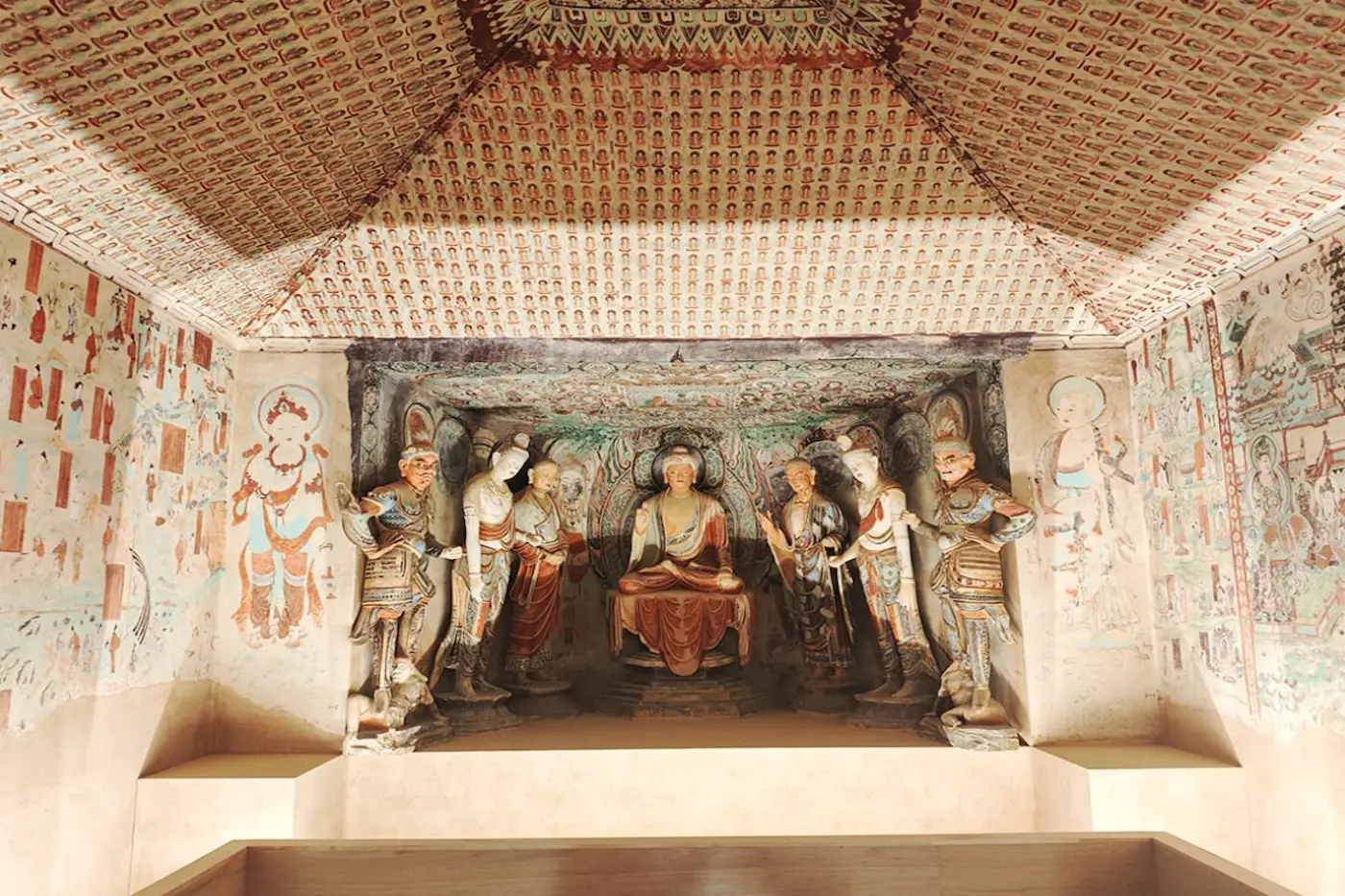
The museum does not reproduce the physical relationship between murals, sculpture and cave architecture. Nor should a replica be mistaken for the conserved original. Use it as preparation and synthesis.
A useful one-hour route
If time is short, focus on four questions:
- Why could an oasis here support movement across a desert region?
- How did frontier administration shape routes west?
- Which communities and languages appear in the historical record?
- How did cave patronage and manuscript production change across periods?
Take notes on unfamiliar names, then continue with Dunhuang as a Silk Road crossroads, the Mogao Caves guide and the Dunhuang manuscripts.
Practical planning
Place the museum on a city-based half-day rather than a remote western-route day. Verify current opening days, identification, reservation and photography rules shortly before visiting. Keep food and drink out of galleries and follow object-specific restrictions.
For a balanced sequence, see our two-day Dunhuang itinerary.
Questions people ask
Is Dunhuang Museum worth visiting?
Yes, especially for a first-time visitor who wants a chronological introduction to Dunhuang before connecting the caves, frontier routes and manuscripts. It is context, not a substitute for Mogao.
Should I visit Dunhuang Museum before Mogao Caves?
Visiting before Mogao can clarify periods and geography; visiting afterward can help organize what you saw. Choose whichever order fits the fixed cave reservation.
How long should I spend at Dunhuang Museum?
Allow roughly one to two hours as a planning range, then adjust to current exhibitions and your interests. Confirm current opening and reservation requirements through official local information.