places
Dunhuang Murals: A Thousand Years of Painted Worlds
An introduction to the Mogao cave murals, their subjects, historical layers, cultural exchange, and responsible interpretation.
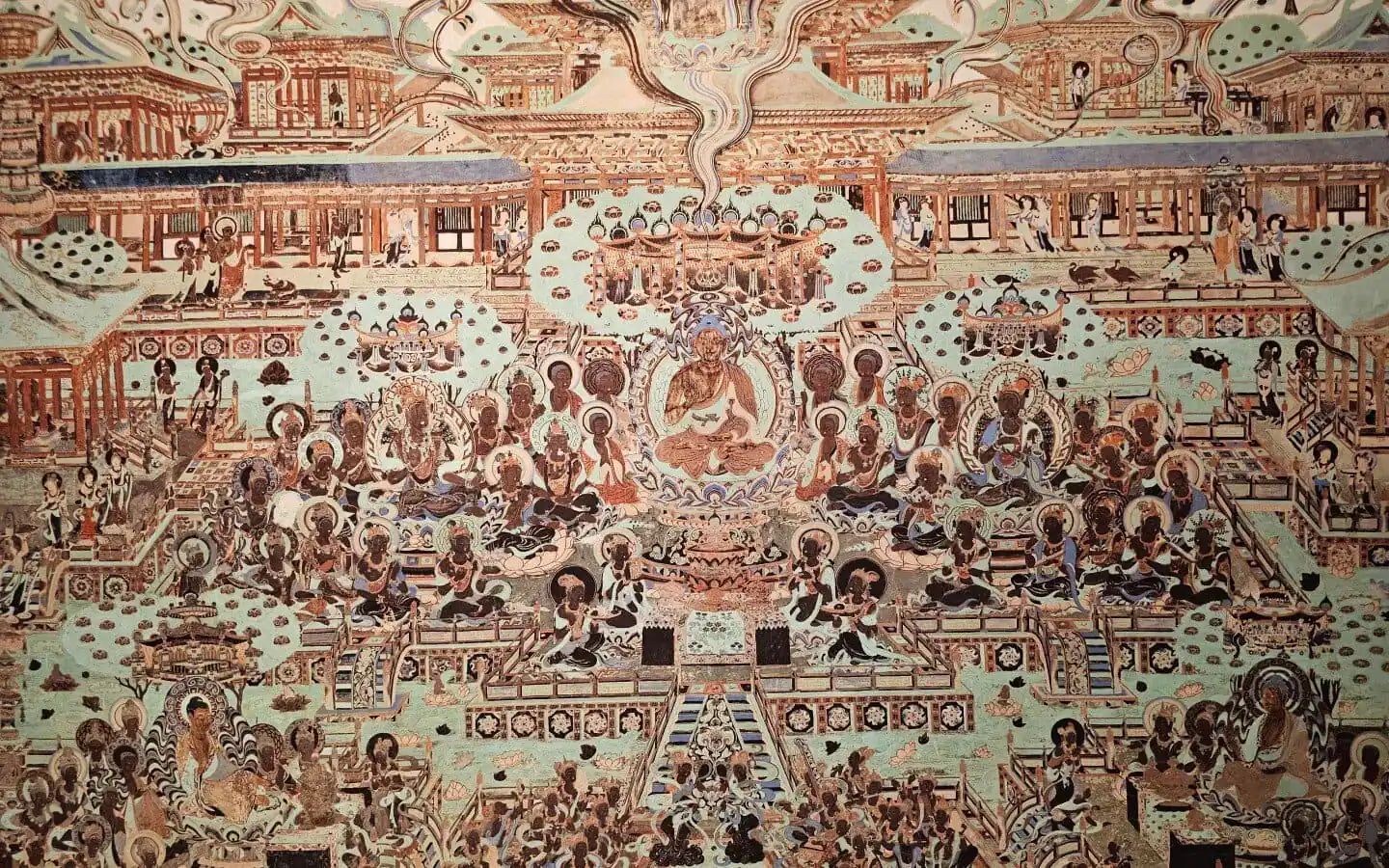
Why the Dunhuang murals matter
UNESCO records approximately 45,000 square metres of murals across the preserved Mogao cave complex. Created and renewed across many centuries, they cannot be reduced to one period or one visual style.
The paintings are central to Buddhist cave sanctuaries, but their historical value reaches further. They preserve images of patrons, architecture, clothing, music, work, landscape, travel, and cultural exchange.
Subjects inside the caves
Visitors and digital viewers may encounter Buddha assemblies, bodhisattvas, flying celestial figures, narrative paintings, donor portraits, decorative ceilings, and scenes connected with sutras and devotional practice.
Some caves also contain material evidence of ordinary and political worlds. UNESCO highlights depictions that include trade missions, workers, warriors, roads, caravans, rivers, and cities.
Murals are not a single symbolic dictionary
Meanings depend on cave, date, patronage, religious context, and composition. A lotus, flying figure, or halo should not automatically be assigned a universal modern “energy.” Dunhuang Within separates documented context from our contemporary reflection.
Explore the flying figures known as feitian or view selected caves through Digital Dunhuang.
Sources & further reading
- Mogao Caves — UNESCO World Heritage Centre
- Digital Dunhuang — Dunhuang Academy